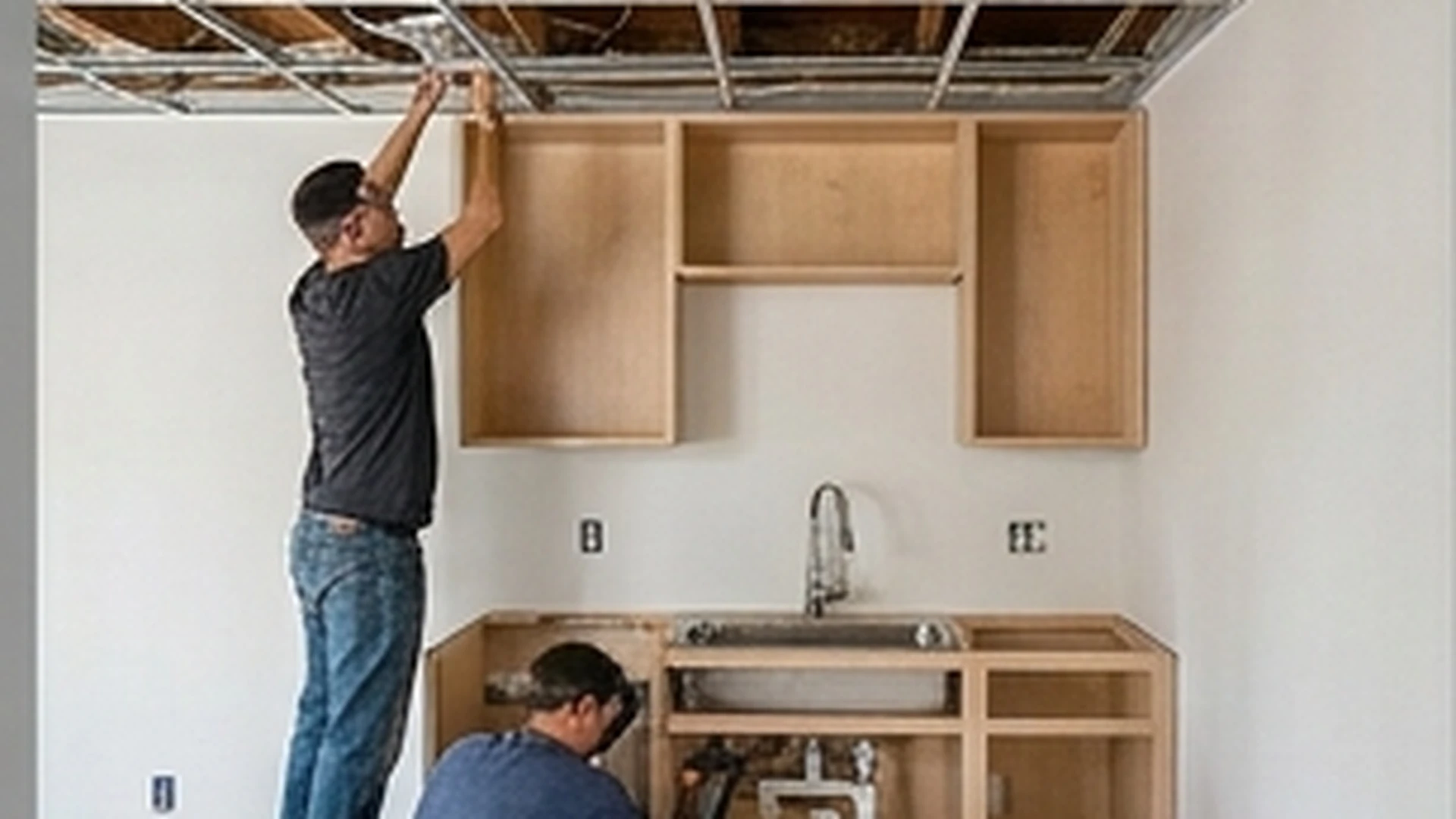
01Duct Route Before Cabinet DesignA ducted range hood exhausts cooking smoke, steam, and grease to the exterior of the house. The duct route — up through cabinets to the ceiling, then across the ceiling to an exterior wall, or straight up through the roof — must be planned before cabinet layout is finalized. The duct takes space. A duct route that goes through upper cabinets eliminates those cabinets. Knowing the route before ordering cabinets allows the layout to accommodate it.
02CFM Requirements for Kitchen SizeA range hood's airflow capacity is rated in cubic feet per minute (CFM). The minimum recommended capacity is based on the kitchen size and cooking intensity. Gas ranges generate more heat and combustion products than electric; they require higher CFM ratings. A hood that's undersized for the range draws inadequately — the kitchen still fills with cooking odors and grease particles. We size the hood to match the range type and kitchen volume.
03Recirculating vs. Ducted: Real DifferencesDucted (vented to exterior) hoods remove cooking byproducts from the kitchen entirely. Recirculating hoods filter the air and return it to the kitchen — they remove some grease and odor but not moisture or heat. Ducted is significantly more effective. Recirculating hoods are used when ductwork to the exterior is not feasible — typically in apartments, condos, or kitchens where no exterior route exists. For single-family Frederick homes, ducted is almost always feasible and preferred.
Makeup Air for High-CFM Hoods
Range hoods above 400 CFM remove air from the kitchen faster than infiltration can replace it in a tightly sealed home. This creates negative pressure that can backdraft combustion appliances (gas furnaces, water heaters) — a carbon monoxide risk. High-CFM installations in newer, well-sealed homes sometimes require a makeup air system that brings controlled outdoor air into the home when the hood is running. Maryland requires makeup air for hoods above 400 CFM in energy-efficient construction. We assess makeup air requirements when specifying high-CFM range hoods.
Custom Cabinet Hood Surround
A custom cabinet hood surround — a wood box built around a standard insert hood — gives the range hood the appearance of a furniture piece rather than a stainless steel appliance. The surround can be painted to match upper cabinets, stained to match a two-tone kitchen, or designed as an architectural feature with corbels and decorative profiles. The insert hood goes inside the surround; the surround itself is built by the cabinetmaker and installed with the upper cabinet run.
Duct Size and Noise
Range hood noise is partly a function of duct size. The same volume of air moved through a smaller duct creates more static pressure — the fan works harder and produces more noise. Properly sized ductwork (at least the duct area recommended by the hood manufacturer, typically 6-inch round or 3.25×10-inch rectangular) significantly reduces operating noise compared to undersized ductwork. Transitions and bends add resistance — the straighter and shorter the duct run, the quieter and more efficient the hood.
Replacing an Existing Range Hood
Replacing an existing range hood with a higher-CFM unit or a different style is often straightforward if the existing duct route and electrical are adequate. If the new hood requires a larger duct diameter (common when upgrading from a basic hood to a higher-capacity model), the duct may need to be replaced. If the new hood style is different — replacing an under-cabinet unit with a wall-mount chimney hood, for example — the cabinet above the range may need to be modified or removed to accommodate the new design.