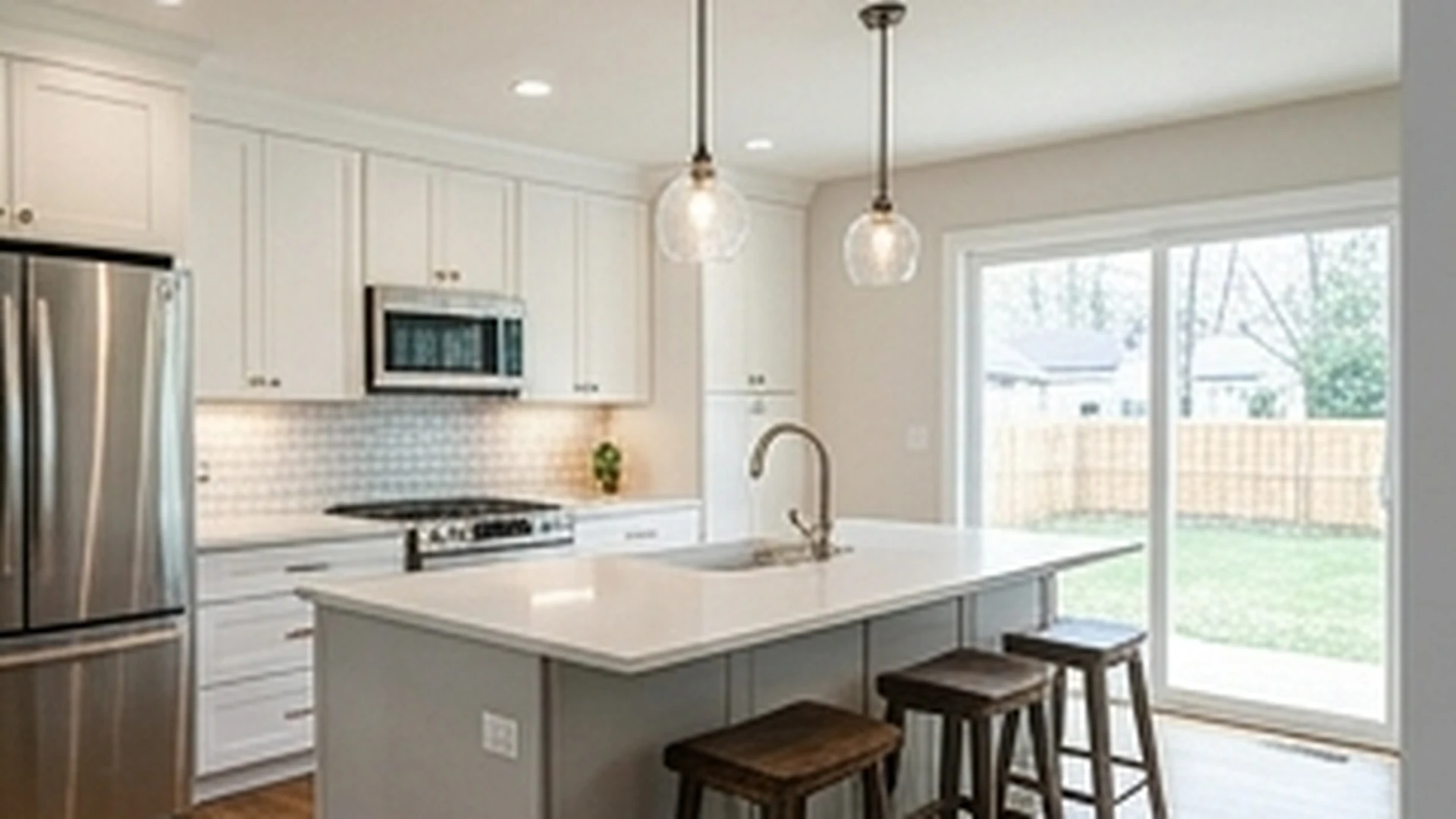
01Sequence Depends on Cabinet StyleFull-overlay cabinets (where the door covers the face frame) can be installed on top of the finished floor — the toe kick hides the floor-cabinet gap. Frameless cabinets with exposed toe kick bases should be installed before flooring. The flooring sequence is determined by cabinet construction, and getting it wrong means either cutting flooring around cabinet bases or visible gaps at the cabinet-to-floor transition.
02Subfloor Condition FirstKitchen subfloors in older Frederick homes are frequently damaged from years of dishwasher leaks, refrigerator drip pan overflow, and sink supply line slow leaks. Soft spots, delaminated plywood, or rotted subfloor in high-moisture areas get repaired before the new floor goes down. Installing new flooring over a damaged subfloor transfers the problem to the new material.
03LVP in Kitchen EnvironmentsLuxury vinyl plank has become the most common kitchen flooring choice in Frederick remodels because it's waterproof, stable in the kitchen environment, comfortable underfoot, and available at a wide range of price points. Proper installation requires a flat subfloor — LVP can't span subfloor dips without the clicks separating over time. Subfloor flatness prep is non-negotiable for floating LVP installations.
Running Flooring Through the Entire Space
In open-concept kitchens, running the same flooring material through the kitchen and into the adjacent dining or living area eliminates the transition strip that would otherwise mark where the kitchen ends. A single continuous floor makes the combined space feel larger and more intentional. The timing — floor before or after cabinets — is determined by the cabinet construction as described above, and the flooring material needs to be rated for kitchen use across the entire run.
Tile Direction and Pattern
Porcelain tile can be installed in a straight grid, a 1/3-offset running bond, or at a 45-degree diagonal. The straight grid shows grout lines most prominently. Running bond hides size variation and is forgiving of cuts at walls. Diagonal installation makes a small kitchen feel larger by drawing the eye to the corners. Large-format tile (18×18 and above) typically looks best in a straight or offset grid — diagonal cuts on large tiles create a lot of narrow cut pieces at walls.
Older Homes: What's Under the Current Floor
Many older Frederick homes have layered flooring — multiple generations of vinyl, linoleum, and tile installed over each other. These layers can hide asbestos-containing vinyl composition tile (VCT) common in homes built before 1975. We identify the presence of potential hazardous materials during demo assessment. Asbestos tile that's intact and adhered can sometimes be encapsulated rather than removed; removal requires specific abatement protocols. Either way, it needs to be addressed before new flooring is installed.
Grout Joint Sizing for Kitchen Tile
Kitchen floor tile grout joints should be wide enough to accommodate natural size variation in the tile — typically 1/8 to 3/16 inch for standard porcelain. Narrower joints on floor tile risk cracked grout when the tile edges are not perfectly sized (all tile has slight size variation). Wide joints are more visible but more forgiving. Dark grout hides kitchen stains better than light grout but shows light dust. The maintenance reality should factor into grout color selection for a kitchen floor.